
One of the major problems with cooking is choosing between a microwave vs oven. Both devices are extremely good, but they all have their own benefits in accordance with the cook’s needs. Be it warming up food, baking a cake, or cooking a chicken, the right choice can give you a huge advantage. In this article, we will cover all the aspects of the microwave vs oven debate, starting from their major differences to the one that is best for various cooking tasks.

Table of contents
What Can I Cook With a Microwave?
Microwaves are undoubtedly one of the most convenient kitchen appliances around. Their main strong point is the speed and ease of use. A microwave can heat up or cook food in just a few minutes, which is why it is the most preferred tool in busy households. Here are some of the things you can easily cook in a microwave:

- Reheating: One of the microwave vs oven advantages is its quickness in reheating food. The food heating process can be done in a microwave without needing to preheat or wait for long cooking times, thus saving time, whether it is yesterday’s pizza or a cup of soup.
- Defrosting: Microwaves are effective at thawing frozen food quickly, allowing for meal preparation in a significantly shorter time compared to when done in an oven.
- Cooking Simple Meals: The microwave can be used for a large variety of cooking, including steaming vegetables and baking potatoes. It is perfect for quick and uncomplicated meals where cooking in the oven might be more complicated.
- Popcorn and Snacks: Microwaves are amazing at making popcorn, heating up frozen snacks, and even cooking very simple breakfast items such as scrambled eggs.
Microwave is certainly very handy; however, the range of its cooking skills is usually restricted to reheating, defrosting, or preparing very simple meals. If you are aiming for more complex cooking methods, then perhaps an oven would be a better choice.
What Can I Cook With an Oven?
On the other hand, ovens are known for their versatility and ability to handle a wide variety of cooking techniques. Whether you’re baking, roasting, or even broiling, the oven is a kitchen powerhouse. Here’s a breakdown of what you can cook in an oven:

- Baking: The oven vs microwave debate often revolves around baking. Ovens provide the dry heat needed for baked goods like cakes, cookies, and bread. The results from an oven are unbeatable in terms of texture and flavor.
- Roasting: If you’re looking to cook meats, vegetables, or poultry with a crispy exterior and tender interior, the oven is the appliance you need. Roasting in an oven allows for even heat distribution and results in a golden, flavorful crust.
- Broiling: An oven’s broiler function can quickly cook meats, vegetables, and fish, giving them a charred, crisp exterior without drying them out.
- Slow Cooking and Convection: Modern convection ovens can circulate hot air, speeding up cooking time while ensuring evenly cooked meals. Ovens also work great for slow cooking stews, casseroles, and other hearty meals that need longer cooking times.
When it comes to preparing meals that require precise temperature control or cooking for extended periods, an oven truly shines.
Difference Between Microwave and Oven
Understanding the key differences between a microwave vs oven is essential in deciding which appliance to use. Here are some important factors to consider:
1. Working Principle
The primary difference between a microwave and oven lies in how they cook food. A microwave uses electromagnetic waves, which generate heat by agitating water molecules in the food. This method cooks food quickly by heating it from the inside out. On the other hand, an oven operates by heating food through radiant heat or convection. Radiant heat comes from the heating elements, while convection ovens use a fan to circulate hot air for more even cooking. This slower process gives food a more consistent texture, which is perfect for baking or roasting.
2. Cooking time
In terms of cooking time, the microwave is the clear winner. It can cook food in a matter of minutes, making it ideal for reheating, defrosting, or preparing quick meals. A microwave does not need time to preheat and cooks food directly, making it far more efficient for small, quick tasks. In contrast, an oven generally takes longer. The oven needs time to preheat before it can cook, and some foods require longer cooking times. However, while the microwave is faster, the oven allows for more precise cooking, particularly for large meals or dishes that require longer cook times, such as casseroles or roasts.
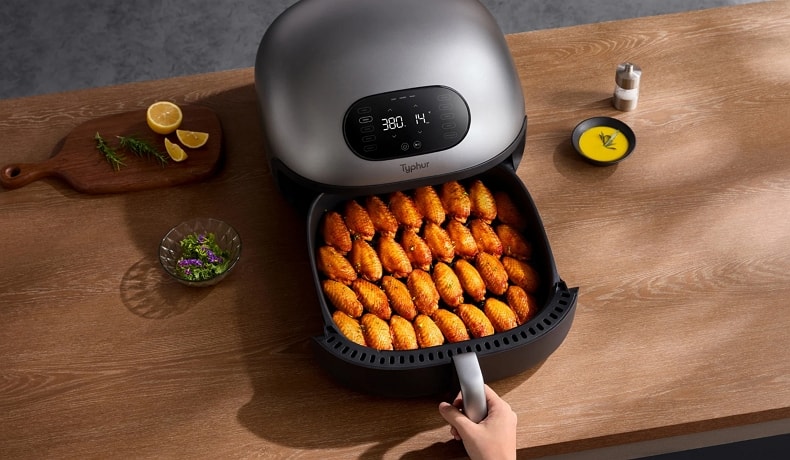
But when it comes to cooking speed, the Typhur Sync Oven takes things a step further. It can cook up to 30% faster than traditional ovens, thanks to the 360° Turbo Convection System. The combination of dual heating elements and a 2400 RPM fan ensures even and powerful heat circulation, allowing for faster cooking without compromising on flavor or texture. This makes it a great choice for those who need the performance of an oven but want the speed that a microwave offers.

The First Countertop Oven with a Wireless Thermometer
3. Temperature range
Another noticeable difference is the temperature range. Microwaves operate at much lower temperatures compared to ovens. Typically, microwaves cook food at around 250°F to 300°F, which is sufficient for reheating, defrosting, and cooking simple meals. However, they cannot achieve the high temperatures necessary for baking or roasting. Ovens, on the other hand, can reach temperatures as high as 500°F, which makes them perfect for tasks like baking bread, roasting meats, and broiling. This higher temperature range allows for better texture development, such as crispy exteriors and tender interiors, that microwaves cannot achieve.
4. Cooking capabilities
In terms of cooking capabilities, the microwave excels in speed and simplicity. It is great for reheating leftovers, making popcorn, or cooking meals like rice or microwave-friendly casseroles. However, its ability to cook food to the desired texture, especially for dishes that require browning or crisping, is limited. This is where an oven shines. Ovens are much more versatile when it comes to cooking a wider variety of meals, from baking cakes to roasting meats. The oven’s heat distribution and extended cooking time allow for better texture and more even cooking, making it the preferred option for intricate or time-consuming meals.
The Typhur Sync Oven offers an excellent middle ground with its 12-in-1 versatility, allowing you to cook a wide variety of foods and achieve the perfect texture for every meal. Whether you’re air frying your favorite snacks, roasting a chicken, or baking a pizza, the Typhur Sync Oven combines the best features of both microwave and oven cooking. Its ability to automatically adjust cooking times and temperatures ensures your meals come out perfectly every time.

5. Energy efficiency
When it comes to energy efficiency, microwaves are the more energy-efficient option for small meals. Because they cook food quickly and don’t require preheating, microwaves consume less power than ovens, particularly when cooking smaller portions. However, ovens can be more efficient for larger meals or batch cooking. Although they consume more energy due to longer cooking times and the need for preheating, ovens are better at cooking in bulk, meaning that they’re more energy-efficient when preparing multiple dishes at once. The microwave’s speed, on the other hand, makes it a great choice for reheating single servings or preparing smaller meals.
Microwave vs. Oven: Which One Should I Choose?
When deciding between a microwave vs oven, consider your cooking needs and the type of meals you prepare regularly.
Choose a Microwave If:
- You want to reheat food quickly.
- You’re looking for speed and convenience in daily cooking.
- You need an appliance that requires minimal effort for simple meals.
- You’re limited on kitchen space and need something compact.
- You prefer a more energy-efficient option for small cooking tasks.
Choose an Oven If:
- You want to bake or roast foods like cakes, cookies, or chicken.
- You need texture-driven meals, like crispy roasted vegetables or golden crusts.
- You enjoy cooking larger meals for family gatherings or meal prepping.
- You value even cooking and temperature control, as in dishes that need slow cooking.

While microwaves and ovens both have their distinct advantages, the Typhur Sync Oven stands out by offering the benefits of both in one appliance. The Typhur Sync Oven takes precision cooking to the next level with its built-in wireless thermometer, ensuring that your food is cooked to perfection every time. The automatic temperature monitoring feature means you don’t have to manually check your food—once it reaches the desired doneness, the oven automatically stops cooking.
The First Countertop Oven with a Wireless Thermometer
For those looking for the perfect balance of speed, convenience, and quality results, the Typhur Sync Oven is a great choice. If you find yourself needing the quickness of a microwave but also want the ability to bake, roast, and cook with precision, the Typhur Sync Oven is the appliance that does it all.
FAQs
It’s better to bake in an oven, as it provides even heat distribution and allows food to develop the proper texture. Microwave baking can be uneven and doesn’t provide the same results as an oven.
Both appliances can be used for healthy cooking, but microwaves typically require less oil due to the faster cooking time. An oven, however, is ideal for roasting and baking with minimal added fats.
While a microwave can replace an oven for certain tasks like reheating and quick meals, it cannot fully replace the functionality of an oven for complex cooking tasks such as baking, roasting, or slow cooking.
Key Takeaways
Choosing between a microwave vs oven largely depends on your cooking style and needs. Microwaves are fantastic for fast, efficient cooking, especially when reheating or cooking simple meals. On the other hand, ovens offer versatility, precision, and the ability to bake, roast, and slow-cook with better texture and flavor. Ultimately, the decision should be based on your kitchen space, the types of meals you prepare, and how much time you’re willing to spend cooking. Whether you choose the microwave vs toaster oven or an oven for its versatility, each appliance has its place in the modern kitchen.